Search Results
127 results found with an empty search
- Simplex, Duplex, Offset and Split
Some time ago, a ham on twitter posted about a “2m SSB simplex contact” he had made. Another ham replied with “2m SSB is just that. The word simplex is not needed.” The second ham is incorrect…not all 2m SSB contacts are simplex. Most of them are but not all. More importantly, I think this exchange highlights some common confusion about terms such as simplex, duplex and repeater operation. Terminology Simplex – In the amateur radio context, simplex operation means the radio stations are communicating with each other directly, on the same frequency. Both stations take turns transmitting and receiving on the same frequency with no repeater or other device in between. Duplex – Duplex operation means that a radio station transmits on one frequency and receives on a different frequency. Full Duplex – Operating duplex with the ability to transmit and receive simultaneously. Half Duplex – Operating duplex, but having to switch between transmit and receive (no simultaneous transmit and receive capability) Repeaters Very often simplex and duplex operation are associated with FM on the VHF and UHF bands. If you are talking to another ham directly, on one frequency, with no repeater involved, that is simplex operation. FM repeater operation uses two frequencies: the repeater receive frequency and the repeater transmit frequency. The repeater’s job is to take the signal it hears on its receiver and retransmit it on the transmit frequency. Repeaters operate in full duplex mode, because they receive and transmit at the same time. The repeater user is usually operating in half duplex, using two frequencies but switching between transmit and receive. Some FM ham radio gear can operate in full duplex mode (usually employing two different ham bands) but most equipment is half duplex only. We refer to a repeater by its transmit frequency, which is the frequency the user listens on. When the user transmits, the radio automatically changes frequency as required by the repeater’s offset (the difference between its transmit and receive frequencies.) The repeater offset is sometimes referred to as the repeater split. HF Operating The vast majority of HF operation is simplex operation. We dial up a particular frequency and chat back and forth on that same frequency. However, duplex operating is also used on HF, typically referred to as working split. A DX station may have a large number of stations calling him, creating a “pile up” on frequency. His ability to make contacts slows dramatically as this huge pile of stations calling him creates interference on his frequency. The DX station can’t hear the particular station he’s trying to work and the station he is trying to work also has trouble hearing the DX station. A common practice is for the DX station to listen on a different frequency, typically a few kHz up from his transmit frequency. The DX operator will say something like “listening up 10” to indicate he is listening 10 kHz higher than his transmit frequency. Or he may just say his receive frequency explicitly (“listening 14.180 MHz”). The idea is that the DX transmit frequency will always remain clear so everyone can hear the popular station. Everyone hears the DX pull a callsign out of the pile, when the contact is complete and when he’s ready for the next call. Things get easier for the DX station as the calling stations tend to spread out and he can tune around a bit to find a particular station he wants to contact. See our Split Mode article for more on HF split ops. Making this happen is a bit tricky and requires the use of two VFOs on the transceiver. Most modern transceivers have this capability. The calling stations set one VFO to the DX station’s transmit frequency and adjust the other VFO to be on the receive frequency specified by the DX station (“up 10”). The transceiver is set to listen on the first VFO and transmit on the second VFO. This is usually called split operation in the transceiver manual. If your radio does not have split operation, it is going to be very difficult to contact a DX station running split. On the HF bands, split operation is an example of half-duplex operation. I suppose it could be full duplex under some circumstances but in most cases transmit and receive will not be simultaneous. VHF CW/SSB Operating Excluding FM repeater use, most VHF and UHF operating is also simplex. VHF operators can operate split just like the HF case but I can’t recall actually hearing this on the air. A strong band opening on 6m behaves a lot like HF, so a large DX pileup could benefit from going duplex. A linear translator retransmits SSB or CW signals, similar to an FM repeater but for linear modulation. There are very few linear translators being used on earth but they are a form of SSB operating that is not simplex. Linear translators actually retransmit a range of frequencies, not just one, so that multiple users can be supported by one translator. Linear translators are commonly deployed in space as satellites. Satellite Operating Satellites use one ham band for the uplink and another ham band for the down link. For example, the FO-29 satellite uses 145.9 – 146.0 MHz for the uplink and 435.8 – 435.9 MHz for the downlink. Similar to a repeater, the satellite operates full duplex, transmitting the signal that is heard on the receiver (uplink). Ham satellites use different modulation types, including FM, SSB, CW and digital formats. It is the most common example of “non-simplex” SSB operating on the VHF bands. It is highly desirable for the satellite user to also operate full duplex (usually with headphones to avoid feedback). That way, the user can determine how well he is getting into the satellite, operate with minimum power and just do a better job of avoiding interference to other users. The FM birds can be worked with just a handheld transceiver (HT), making portable operating easy. However, only a few HTs have the ability to operate full duplex, so a lot of satellite operating is done using half duplex. Summary To wrap up then, simplex is a term that applies on all of the ham bands, because it is the simplest way to communicate. However, it is not the “opposite” of using a repeater. Duplex is also a term that applies in a variety of cases, including repeater operation, working split on HF or VHF and working crossband via satellite. -- Bob KØNR
- Online License Course Provides New Teaching Options
Our most recent Technician license class for the Tri-Lakes Monument Radio Association made use of the Ham Radio School online course. We were looking for a way to provide the students additional flexibility in consuming the course content while reducing the load on the instructor team. Our club places a high value on in-person interaction with the students which has many benefits, so we did not want to use a completely online approach. We settled on a hybrid approach to the class that had three in-person sessions. For more details on the timing of these sessions, take a look at the flyer below. Kick-off session We started off with the Kick-Off session that introduced the instructor team and helped us get to know the students. We provided an overview of the course and demonstrated ham radio gear (handheld radios, HF contacts, repeater use, digital modes, etc.). We also reinforced expectations of student progress and engagement. After the Kick-off session, we launched the students on individual study via the Ham Radio School online class. Exam session Our club's VE team administered the FCC exam three weeks after the kick-off session. A key idea here is to have the students progress through the material at the same pace and get to the exam without making the class too long. Get On The Air session One week after the exam, we held a Get On The Air session where the students used their newly issued callsigns to make radio contacts, mostly on VHF/UHF simplex and repeaters. We provided more Info on radio gear, local repeaters, and local clubs & activities. The students did make ham radio contacts and we helped them program their radios, as needed. Pacing and Assistance To keep the class on track and to check-in on any topics they needed help on, we held regular Zoom review sessions. These sessions were held online in the evenings during the week. We also assigned a volunteer Elmer (Mentor or Coach) from our club to tag up with each student. This turned out to be very successful and we consider it a new best practice for our radio club license classes. Each Elmer was assigned 3 or 4 students, and Elmers provided rapid Q&A response to students in between review sessions. Many Elmers also provided students additional demonstrations of their shacks and equipment recommendations. Results and Feedback For those students that followed through with the class (38), we had a 100% success rate on having them pass the Technician exam. We always survey our students after the class to obtain consistent feedback on the class and how we can improve. The feedback was very positive. We asked them about the Ham Radio School online material and received these responses. Not really a surprise, the video lessons received very high scores, along with the Summary/Review page and the Quizzes. The eBook feedback was down a notch, perhaps indicating that the students preferred to view the video rather than read text. The video covers all of the topics, so there is some redundancy built in to the system. Some of this relates to the preferred learning style of the student. Instructor Team We also asked about the role of the instructor team and the various sessions. The Kick-off Session, the Elmer Help and the Exam Session all received excellent marks. The Review sessions via Zoom and Help via email had noticeably lower scores. We are evaluating how to improve the Zoom Reviews. The lower score on Help via email probably just reflects the fact that not all students asked questions via email. Conclusions We are very pleased with the results from this class and will be using a similar approach for future classes. One of the surprises was how effective the use of Elmers turned out to be. A future "What's New?" blog post will dig into this with more detail. I am sharing this experience with existing or potential license class instructors so they can work it into their plans. It takes work to offer a good license class and the Ham Radio School online system is a huge help. It takes a big load off the instructors and provides more flexibility for the students. I hope you find some of these methods helpful and you may want to adapt them to your local situation. If you are interested in offering a license class using the Ham Radio School online course approach, drop us a note and we'll be happy to help with your planning. 73 Bob K0NR
- Rules of Thumb for Decibels
It is common practice in ham radio to use decibels (dB) to describe the ratio of two power levels. Some of the license exam questions require some basic calculations in dB. In this article, we'll describe six Rules of Thumb to assist with these calculations. If you are comfortable with math and using a scientific calculator, you may want to crank out the precise number. However, these Rules of Thumb may still be helpful. The basic definition of decibels in equation form is: which simply means we divide the two power levels, take the base 10 log of that result and then multiply by 10 to get the result in dB. This equation translates linear power ratios into the logarithmic scale that we know as decibels. Once a ratio is in decibel form, we can performa gain and loss calculations using just addition and subtraction. There are a few cardinal values that you may already know concerning decibels. For example, it is well known that a factor of 2 change in power corresponds to a 3 dB change in decibels. A power increase by a factor of 2 is + 3 dB and a decrease by a factor of 2 is - 3 dB. Another rule is that a factor of 10 change in power corresponds to a 10 dB change. (This one is unique in that the ratio and the dB value are the same.) Let's add two additional Rules of Thumb that will expand our tool kit, especially for some of the questions on the Extra exam. A 1 dB increase in decibels corresponds to multiplying the power level by 1.26. A 1 dB decrease corresponds to multiplying by 0.79. We are showing two digits of precision to the right of the decimal point but you might just want to remember "one and one quarter" for the first value and 0.8 for the second value. This table summarizes our six Rules of Thumb. Now let's do a few example calculations to aid our understanding. Example 1 Q: A transmitter produces 100 watts of power into a transmission line that has 3 dB of loss. How much power is present at the other end of the line? A: The transmission line has a 3 dB loss, so we multiply the 100 watts by 0.5 to get 50 watts. Example 2 Q: An amplifier with 20 dB of gain is used to amplify a 5-watt RF signal. What is the power level at the output of the amp? A: We don't have a 20 dB rule of thumb, so we apply the 10 dB rule twice. That is, we multiply 5 watts times 10 (for the first 10 dB) and again by 10 (for the second 10 dB). 5 x 10 x 10 = 500 watts. It should be clear from this example that a 20 dB increase equates to multiplying by 100. Perhaps a 7th rule of thumb to throw into the toolkit. Example 3 Extra Class exam question [E9A02] Q: What is the effective radiated power (ERP) of a repeater station with 150 watts transmitter power output, 2 dB feed line loss, 2.2 dB duplexer loss, and 7 dBd antenna gain? A: The transmit power is given as 150 watts, and we need to determine the net effect of the gains and losses in the system, as follows: System gain = (-2dB – 2.2 dB + 7 dBd) = +2.8 dB We don’t have a rule of thumb for +2.8 dB, but +3 dB will provide an answer that is close enough. A 3 dB increase equates to a power multiplier of 2, or a doubling of the power. Thus: ERP = (2 x 150 watts) = 300 watts. The precise answer is slightly less than this, or 286 watts. Our use of 3 dB will be good enough for many computations, including getting the right answer on the exam. Example 4 Extra Class exam question [E9A06] Q: What is the effective radiated power (ERP) of a repeater station with 200 watts transmitter power output, 4 dB feed line loss, 3.2 dB duplexer loss, 0.8 dB circulator loss, and 10 dBd antenna gain? A: In this question, we have 200 watts of transmit power and three sources of loss: the feed line, the duplexer and the circulator. The system gain = (-4 dB -3.2 dB -0.8 dB + 10dBd) = 2 dB Now we need to adjust the 200 watts of power by an increase of 2 dB but we don’t have a rule for 2 dB. However, we can apply the 1 dB rule two times. ERP = (200 x 1.26 x 1.26) = 317 watts. Keep these rules of thumb handy in memory, not just for the exam, but for practical application in your everyday ham radio life!
- Phonetic Alphabets
For clear communications under all conditions, we use a phonetic alphabet for spelling out critical information. Instead of “A B C”, we say “Alpha Bravo Charlie.” Letters such as D, T and V can sound alike during noisy conditions, whereas Delta, Tango and Victor are more distinct. The standard phonetic alphabet for amateur radio comes from the International Telecommunication Union (ITU) (see below). This alphabet is also referred to as the NATO or International Aviation alphabet, although the spelling of the words may change slightly. This is the phonetic alphabet that you should commit to memory for ham radio use. Adapted from KC4GZX You will hear other phonetic alphabets used on the air from time to time. Also shown in the table above is the “DX alphabet” and its alternate, which are popular on the HF bands for working DX and for contesting. Often these alternatives will be used or mixed with ITU phonetics on the air to provide a variety of phonemes for an exchange with a very weak contact or in difficult atmospheric conditions. Because of these variations, you may think it’s OK to make up your own phonetics. Some hams like to come up with something cute and easy to remember for their own callsign. A callsign such as WØLPR might be “Whiskey Zero Long Playing Radio.” Certainly easy to remember but if you use these phonetics on the air under marginal conditions, you’ll probably just confuse the operator on the other end. Most of the time I stick to the ITU phonetics, but I may use the DX phonetics for contests. The ITU phonetics for my callsign are “Kilo Zero November Romeo,” but I’ll often switch to “Kilo Zero Norway Radio,” which is a syllable shorter. If the other operator is having trouble picking my callsign out of the noise, it sometimes helps to switch phonetic alphabets, as indicated above. Sometimes one or the other sound just happens to get through better or is more recognizable by the other radio operator (especially if English is not their primary language). -- Bob KØNR
- Intro to Digital Voice
Ham radio on the VHF and UHF bands has been dominated by Frequency Modulation (FM), an analog mode invented in the 1930s. FM remains very popular today but in the past decade several digital formats have gained in popularity. These formats are referred to as Digital Voice (DV) modes. What is Digital Voice (DV)? Traditional FM transceivers transmit an analog signal over the air. DV transceivers convert the microphone audio to digital form which is then used to produce a digital stream of bits that goes out on the RF carrier (Figure1). The Analog-to-Digital (A/D) Converter samples the analog waveform and turns it into digital bits which the Vocoder compresses into a more compact digital format. The vocoder is a key piece of technology, with the AMBE decoders being the most common. The compressed digital audio is sent to the modulator, which modulates the RF carrier in the transmitter. At the receiver, these same functions are reversed to recreate the original microphone audio. There are several key advantages of DV radios. Digits are encoded at the originating radio, so as long as the bit stream does not encounter errors there is no degradation of the signal during transport Call sign and other information can be encoded into the digital stream. This can act like a “caller ID” with the name and call sign of the station you are talking to popping up on your radio display. Other information can be included such as GPS location, operator name or a short message. DV signals take up less bandwidth in the frequency spectrum, so they are said to be spectrally efficient. For a given frequency spectrum, more radio channels can be supported. And, in general, digital is cool! In this day and age, why wouldn’t we be using digital voice technology? Internet Connectivity A common thing to do with digital radio signals is to transfer them some distance over a digital network. Often the network used is the internet which allows the signal to go wherever there is an internet connection. This is often called Voice Over Internet Protocol, abbreviated VoIP. We can use VoIP technology to link up a set of repeaters, receive signals on our smartphones or computers, and connect up a personal hotspot station (more on that later). And if the network is down (or you just don't want to use it), DV modes can also be used on digital repeaters and simplex channels. Common Digital Voice Formats We will discuss the main three DV formats used in ham radio (D-STAR, DMR, and YSF). There are other DV formats used but you are much less likely to encounter them. D-STAR (Digital Smart Technologies for Amateur Radio) was the first DV technology specifically made for ham radio, developed by the Japan Amateur Radio League in the late 1990s. ICOM adopted and promoted D-STAR technology and is still the main driving force behind it. (Kenwood now also offers radios with D-STAR capability.) Take a look at this older video from ICOM talking about the benefits of using D-STAR. In 2005, the European Telecommunications Standards Institute (ETSI) published the commercial Digital Mobile Radio (DMR) standard. DMR is a very robust commercial standard, but not defined with amateur radio in mind. Still, many hams saw the potential for using DMR on the ham bands and it quickly gained traction. There are many manufacturers that make DMR equipment, selling to both the commercial and amateur markets (Motorola, Hytera, Anytone, TYT, Alinco, and many others). In 2013, Yaesu introduced the third DV format, this one designed for amateur use, called System Fusion. (It is often called Yaesu System Fusion or simply YSF.) This technology was designed for amateur radio and is considered by some hams to be an improvement over D-STAR. Yaesu is currently the only major ham manufacturer producing YSF radios. About now, you may be thinking that surely these three DV formats are compatible so that the various DV radios can be used to communicate. Well, unfortunately, that is not the case. At a high level, these three radio formats do the same basic thing: they use digital modulation to transmit voice signals over the air. However, these three DV formats are different enough that they are incompatible. These digital radios are compatible in one way: they all support good old analog FM. This allows the radios to support their respective DV mode while remaining backward compatible with FM. Let's take a closer look at these three DV formats. Our goal here is to give you a rough idea of how they work and how they are different. However, this short article won't make you an expert on them. D-STAR The most commonly used D-STAR mode is called "DV", which sends 4800 bps to support simultaneous voice and data transmissions. Digitized voice uses 3600 bps, leav- ing 1200 bps for data transmission. The data transmission is quite slow but it is enough to support things like call sign display ("Caller ID"), GPS position, and short messages. The D-STAR format includes the transmitting station's call sign and headers that indicate where the transmitted signal is intended to go (might be your local repeater or a ham on the other side of the world). The original D-STAR system did not include the concept of many stations getting together on one channel to talk (using repeaters all over the world). So the amateur community created this capability, called a reflector. A reflector is basically a computer server sitting on the network that retransmits ("reflects") a transmitted signal to every repeater that is listening to that reflector. This supports the common ham usage of many people gathering on a particular communication channel. For more info, D-STAR, take a look at this marketing brochure: Yaesu System Fusion YSF has several DV formats to choose from but the most common is called DN, which means digital normal. This mode is similar to D-STAR in that the voice data is combined with a data stream that can carry the call sign, routing information, GPS coordinates, and short messages. The other YSF modes are Voice Wide (VW) which delivers improved audio quality but without the digital data stream and Data Wide (DW) which just supports data transmission, no voice. Similar to D-STAR reflectors, YSF provides a communication network called WIRES-X , which supports a communication method called rooms, similar to D_STAR reflectors, which allows multiple ham operators to gather and communicate. See this brochure from Yaesu for more info on Yaesu System Fusion: DMR Of the three DV technologies, DMR is the most unique. As stated earlier, the DMR standard was created for commercial land mobile radio, not amateur radio. First off, DMR does not support call signs but instead uses a unique number called a Radio ID to tag each radio. The amateur radio community has adapted the Radio ID approach to support call signs by creating a worldwide database that assigns a unique Radio ID to a particular call sign. A user's radio can be loaded with this table of Radio IDs / Call signs so the radio can display the call sign associated with the signal being heard. Because it is an industry standard developed by a formal standards body (ETSI), the DMR documentation is well-crafted and complete. DMR defines three Tiers of functionality (Tier I, Tier II, and Tier III), but amateur radio only uses Tier II. DMR uses Time-Division Multiple Access (TDMA) to create two communication channels (called slots) on one RF carrier. Each time slot is 30 ms long, with one complete cycle lasting 60 ms. As shown in Figure 3, radios assigned to slot 1 transmit and receive during that 30 ms time interval. Similarly, radios assigned to slot 2 use the other 30 ms time interval. This requires tight synchronization between the repeater and the user's radios. A DMR repeater can support two sets of QSOs simultaneously, while only requiring one transmitter and one receiver. From a repeater owner's perspective, this is a "two for one" proposition...install one repeater and get two wireless channels. DMR brought some commercial radio nomenclature into the amateur radio community. (Some of this terminology shows up on the Technician license exam.) The programming information for the radio is commonly called a Code Plug, but it is really just the concept of having a file that gets loaded into your radio to set the memory channels and other functions. DMR has the concept of a Color Code which selects which repeater you are trying to access. If two repeaters overlap in coverage, they would be given unique color codes and the memory channel in your radio would match the repeater you are using. A very important concept in DMR is the Talk Group, which selects which group of users you are in radio contact with. For example, on your local repeater, if you and your friends have Talk Group 100 programmed into your radios, then you will all hear each other but not any other radio transmissions. Another group of repeater users could choose Talk Group 101 for their communications, hearing Talk Group 101 but not Talk Group 100. Talk Groups can also be used with linked repeaters and VoIP systems. There are several networking systems that support DMR VoIP communications, including DMR-MARC, DMRPlus, and Brandmeister. These systems have networked servers that connect multiple hams in many locations, selected by Talk Group. These networks are quite complex, essentially a collection of servers running network protocols that connect up thousands of users running DMR radios. For more info on DMR, see the DMR for Dummies website . Repeaters and Hotspots To get the maximum benefit of these DV modes, you'll want to be able to use repeaters or hotspots to connect to worldwide networks. To find out about repeaters available in your area, use a repeater directory such as repeaterbook.com. The directory will let you see which repeaters support D-STAR, YSF, or DMR. The YSF repeaters from Yaesu can be setup to support both FM and YSF, automatically sensing the type of signal coming into the repeater and repeating the same format. This allows FM users and YSF users to share the same repeater (although they can't normally understand each other). DMR repeaters are normally DV only but sometimes you'll find a DMR repeater that also supports FM. D-STAR repeaters from ICOM only support D-STAR, so most D-STAR repeaters will be DV only. Hotspots are another very popular option for accessing a DV network. A hotspot is a low-power transceiver (typically <100 mW of RF power) that connects a DV network via the internet. This is analogous to the WiFi access point that you may have in your house for internet access. In fact, a DV hotspot might connect to the internet using your WiFi router. So a hotspot is your own personal DV access point with your call sign on it, under your control, configured the way you like. The typical use for a hotspot is to connect it to your home internet (via LAN cable or WiFi), set up to transmit on a 2m or 70 cm simplex frequency. (70 cm is generally preferred and be sure to check your local bandplan for frequency recommendations.) You configure the hotspot to connect to the desired network (via a specific server address) and have it transmit whatever reflector (D-STAR), room (YSF), or talk group (DMR) that you want to communicate with. Typically, the hotspot is only transmitting a short distance to your handheld transceiver, allowing you to walk around the house and yard while talking to hams almost anywhere in the world. There are a number of hotspot available, such as the OpenSpot products from SharkRF and the ZumSpot from ZUMRadio. These hotspots typically support multiple DV formats. In many cases, they can translate from one DV format to another. For example, a YSF radio can be used to communicate with a hotspot which then connects to a DMR network. Along those same lines, ClearNode offers a hotspot that communicates with analog FM radios while connecting to DV networks. Many of these hotspots are built on the Raspberry Pi compute platform, a popular widget used for ham radio applications. If hotspots sound complicated, that's because they are. There is a lot of innovation and experimentation going on with hotspots and DV networks which creates complexity and confusion. Some hams find this challenging and fun, while others just get frustrated with it. It is important to go into this with your eyes wide open. Yaesu offers the HRI-200 interface box for its WIRES-X network that allows a Yaesu transceiver to be a hotspot. Yaesu says it is easy to configure but it works only on the WIRES-X system. Summary We've discussed the three most popular DV formats used in ham radio. These are largely incompatible digital modes but there are some cross-mode capabilities that can link them together (e.g., hotspots). So when you dive into using DV radios, you are typically signing up for a particular DV ecosystem (D-STAR, YSF, or DMR). An obvious first step is to find out what format is most popular in your area and, especially, what repeaters are available. You may want to use a hotspot, which opens up many more possibilities along with some configuration challenges. Finding a mentor that has already figured this out for your local area is a really good idea. You should enter the world of DV with the expectation of needing to learn some new things. (Don't expect it to be turn-key.) This is not a bad thing; learning new technology is an important part of ham radio and can be a lot fun!
- Ham-speak: Learning the Lingo
Like many specialty endeavors and hobbies, ham radio has developed something of its own language over the decades. While clear, plain language is preferred for most operations, terminology from Morse Code, common equipment references, and efficient shortcuts will often be heard on the air between ham station operators. To the new operator some of this language may be a little confusing and require some spin-up. The following is a conversation you could hear on your local repeater. Maybe. Or not. It's a little over-the-top for illustrative purposes, OK? Work with me. 1. Ziggy: NA4LRY, KD8ZIG. 2. Elroy: Hey Zig, what’s up buddy? 3. Ziggy: Hey old man, where are you today? 4. Elroy: I’m at the QTH right now, but I’ll be mobile in a few minutes. I’m going to pick up that new 6-meter beam I bought. Can you give me a hand putting that up, along with my homebrew 2-meter Yagi? 5. Ziggy: Yea, sure, if you are going to do it this afternoon. The XYL has got plans for me later, some new restaurant to try out. Say, did you get any DX this morning? 6. Elroy: Oh yea! 10 and 15 were wide open into Europe. I got real good skip into Scotland and a couple of stations in Italy on my very first CQ, mostly on 10. I worked a little CW QRP on 15 into England, just 5 watts! All good QSOs! Lotta fun, old man! 7. Ziggy: Awesome. Hey, settle down old man, you’re flat topping a little there, getting so excited, hi hi. 8. Elroy: OK, sorry about that. I was just happy to finally get Scotland. Now if I can get a QSL card from that fellow I’ll have my DXCC. 9. Ziggy: Very good! I didn’t know you were that close. Congrats! We should do a DXpedition from over there sometime. That would be fun. 10. Elroy: Yea, I hear they got good 807 over there, too. Well, I’ll see you about 2:00 pm if that’s OK for you, and we’ll get this antenna farm tweaked up. I’d better go get that beam. So 73, KD8ZIG from NA4LRY. I’m clear on your final Zig. 11. Ziggy: OK, thanks for the QSO and I’ll see you later today. 88 to Margie from me. KD8ZIG, QSY to the 345 machine. Did you follow all of that? If you’re somewhat new to ham radio you probably picked up on the meaning of a few new terms, but much of Ziggy and Elroy’s conversation may have sailed overhead. Few on-the-air conversations will be as chock-filled with ham jargon as this invented example, but like many other endeavors that have a technical element ham radio has a language all its own. You will pick it up quickly, however. Let’s decompose Ziggy and Elroy’s chat and interpret it into simple, common language we can all understand. Here we go, line by line. Line 1: Ziggy’s call sign is KD8ZIG, and he is calling specifically for Elroy, NA4LRY. He simply says Elroy’s call sign followed by his own. Line 4: Elroy is really full of jargon in this transmission! QTH is a Q-signal (shorthand signal derived from Morse Code) that refers to one’s current position, and commonly used to mean “home” or the “home radio station.” Elroy means he is at home. When Elroy says he will be mobile, it means he will be away from home and probably transmitting with a moving radio station in his car. A 6-meter beam is an antenna for the 6-meter radio band, and a beam antenna is one that provides improved transmission and reception in one direction – also called a directional antenna. Many hams love to homebrew, and I don’t mean beer. Homebrew equipment, such as antennas or circuits, are home built items, usually a ham’s pride and joy! Finally, Elroy refers to a specific kind of beam antenna, the Yagi, named for a Japanese inventor. In this case, the Yagi directional antenna is for the 2-meter band. So, Elroy has a little antenna project going today, installing two new directional antennas. Line 5: Ziggy has an evening date with his XYL, or “ex-young lady,” meaning his wife. Although less common, I have heard the reference XYM, implying ex-young man, or husband. But Ziggy quickly gets off social topics and back to serious radio matters, inquiring about Elroy’s DX: distance contacts, meaning radio contacts out of country. Line 6: Elroy, again loaded with jargon, enthusiastically relates his morning DX contacts with two European nations on10 and 15, meaning the 10-meter and 15-meter radio bands. A radio band is said to be open when it is reflecting from the ionosphere and allowing long distance contacts by ionosphere skip, or repeated reflections between ionosphere and ground of the radio signals. Particularly with the higher frequency HF bands like 10-meters and 15-meters, the band may not be open unless solar conditions are very active and the ionosphere is densely charged. That is, the transmissions will pass through the ionosphere and travel into space rather than returning to earth to be received by a DX station. CQ is a call that means calling any station, frequently used on the HF bands where you are trying to make contact with anyone anywhere. CW stands for continuous wave, the transmission mode used with International Morse Code to tap out letters and numbers. It is a very power-efficient mode of transmission that is commonly used QRP, a Q-signal referring to low power or reduced power transmission. QSO is the Q-signal for an on-the-air conversation, like Ziggy and Elroy are having, or like the contacts Elroy is describing with the European stations. What a mouthful, huh? Line 7: Ziggy refers to Elroy again as old man that in ham lingo is a term of endearment or friendship, a pal or a buddy. However, if your pal or buddy is an XYL, or simply a YL (young lady), you should probably avoid use of this jargon! Ziggy notes Elroy’s flat topping, otherwise called over-modulating or (on FM) over-deviating. In other words, Ziggy is telling Elroy that he was too loud or too close to his microphone and causing a distorted audio signal. (You can learn more about over-modulation and over-deviation in the HamRadioSchool.com Technician License Course book, Chapter 6.) And just to indicate to Elroy that he is amused by his excitement about the DX contacts, Ziggy ends with "hi hi," sort of an artificial laughter that some hams like to use. Be aware, genuine, actual, cackling laughter on the air is also allowed and highly encouraged! Line 8: The Q-signal QSL means acknowledge receipt, or message understood. A QSL card is a physical card, much like a postcard, acknowledging a radio contact between stations. QSL cards are used to confirm contacts for various awards, such as the ARRL’s DXCC award, awarded for contacting stations in 100 different countries around the world. Line 9: A DXpedition is a fun trip for hams to a different country or a remote area from which radio operations are conducted. Ziggy wants to travel to Scotland for such a radio expedition! Line 10: The 807 to which Elroy refers is a less popular on-air discreet term for ale or beer. This is not to be confused with the popular 807 amplifier tube. If a ham has a number of antennas in the air at his station, it is commonly referred to as an antenna farm, as Elroy notes. Elroy issues 73 (often distinct “seven, three” or “seventy-three,” but not the plural form “seventy-threes”), meaning best regards. You’ll hear the 73 term frequently as a salutation. Elroy indicates he is clear on Ziggy’s final: Elroy is done using the frequency or repeater (clear) following Ziggy’s final transmission in this QSO (your final). Line 11: Ziggy bids Elroy’s XYL Margie 88, meaning hugs and kisses – not always well received if the level of familiarity does not fit, but Margie happens to be Ziggy’s sister. Finally, Ziggy informs of his QSY, another Q-signal meaning he is changing frequency. The 345 machine (or any similar reference by name or frequency) is another repeater with a frequency ending in 345. Ziggy is switching over to that other repeater. Not CB: Note a couple of things that are not voiced in this ham radio QSO. In line 3 Ziggy did not ask for Elroy’s “10-20” as in CB radio lingo. In fact, there were no “good buddies” or “10-4s” or “smokies” or any of that other CB stuff. Ham lingo and CB lingo do not typically mix in the same on-air circles. Leave the “Chew ‘n Choke” and your “Ears” on the channels of the citizen’s 11-meter band, where they belong. Many hams do not appreciate hearing CB lingo on the amateur bands. More Ham-speak References: Hopefully the QSO makes more sense to you now, and you have a little better idea of typical ham conduct on the air. You will find a list of common Q-signals and a list of common ham terms linked on the Technician Learning page, in Section 1.2, Ham Operating Basics. Don’t overuse jargon! Just speak with plain, clear language and normal terminology in most cases on the air. Clear unambiguous language is almost always better than jargon for the sake of jargon. But if you want to throw in a Q-signal or well-used ham term once in a while for efficiency or just to sound cool, go for it! Most hams won’t blink an eye. Have fun learning and using ham-speak. -- Stu WØSTU
- Basic On-Air Rules & Regs
As an Amateur Radio Service licensed operator, you are obligated to follow some rules and regulations during your radio operations that are established by the Federal Communications Commission. Specifically, the regulations governing the Amateur Radio Service are outlined in the Code of Federal Regulations, Title 47, Part 97. Usually this code is referred to by hams simply as "Part 97." Part 97 is an extensive document -- go take a look at the link above. However, as a ham operator you do not need to memorize the entire Part 97 code. There are a few key rules and regs that you need to adhere to that will keep you out of trouble. This article will introduce a few of these so that you can get the gist of things. You will learn more as you study for your Technician exam, and yet more if you upgrade your license beyond Tech. License Term An Amateur Radio Service license is granted for a period of 10 years. At the expiration of the 10-year term the licensee may renew the license with no requirement for re-examination. The open renewal may be accomplished within 2 years of expiration. After that 2-year grace period, the license is revoked and the former licensee must again pass an examination to be reissued a license. During the 2-year grace period for renewal the license holder is not authorized to transmit on the Amateur bands. Prohibited Activities The Amateur Radio Service is established for specific purposes outlined in Part 97, and certain activities are inconsistent with the intended purpose of the service: Obscene or indecent language -- as part of the purpose of promoting international goodwill, as well as common decency among the wide variety of ages and backgrounds of ham operators, you have to keep it clean on the air. Codes or cyphers that hide the meaning of messages -- Morse Code is an open code and readily used on the air, but secret codes or cyphers are prohibited in Amateur Radio. Harmful or willful interference -- no one has exclusive use of any Amateur frequency, and purposefully interfering with others communications is a violation of regulation. Retransmission of commercial broadcasts -- the Amateur Radio Service is intended for two-way communications, but not for one-way public broadcasts. Music transmissions -- similar to the broadcasting exclusion, music transmissions are not consistent with the purpose of Amateur Radio and are prohibited. No Compensation or Payments Ham operators may not receive any compensation for radio operations except for the receipt of a normal salary when ham radio operation is incidental to classroom instruction at an educational institution. So, you can't use ham radio to run your home repair service dispatch, but if you are a teacher you can be paid while using ham radio to instruct students in science, geography, communications, or any other subject that applies. Station Inspection by the FCC You must make your station available for FCC inspection upon request from the FCC. Relax... This is exceedingly rare and usually occurs only when gross violations of Part 97 are under investigation. Still, the regulation applies with the granting of your Amateur license. Control Operator A control operator is the licensee who is in control of a station. A transmitting Amateur station must always have a control operator, whether that is the station owner or a licensed person designated by the station owner. The transmitting privileges allowed of a station are those associated with the license class of the control operator. So, if as an Extra Class licensee I designate a Technician licensee to be the control operator of my station, that operator must remain within the band privileges of the Technician and cannot transmit outside of those band privileges. Station Identification A control operator must identify with FCC-issued call sign every 10 minutes and at the end of any set of communications. Station identification must be issued in English or by Morse Code. Note, there is no regulation requiring station identification at the start of communications, but that is often done simply in the natural course of dialog between operators at the initiation of a radio contact. And there are many other regulations from Part 97 that apply to Amateur Radio operations. However, for the vast majority of on-air activity, these simple rules above will keep you within the rule book. When you get into long-distance, international communications with a General Class license, you'll need to learn a few more rules. If you become a Volunteer Examiner who can participate in license exams, you'll need to follow regs associated with that activity. Other specialized services and activities have additional provisions for those who engage in them. But you can always reference Part 97 to be sure your keeping your station ops in line with good Amateur practice. Stu WØSTU
- FM Bandwidth
The Technician question pool (2022-2026) asks you to identify FM bandwidth: T8A09: What is the approximate bandwidth of a VHF repeater FM phone signal? A. Less than 500 Hz B. About 150 kHz C. Between 10 and 15 kHz D. Between 50 and 125 kHz This question gets at an important characteristic of FM signals, so let's consider it carefully. Let’s start by picking apart this question for interpretation and definitions. Then we’ll get to the particulars of the correct response options. Bandwidth: The question is asking about bandwidth. The bandwidth of an RF signals is the range of frequencies (RF spectrum) used to carry information. It is a range of radio frequencies transmitted or received for which the power is not zero. An RF signal typically utilizes a substantial range of radio frequencies to carry information such as a set of audio frequency signals representing an operator’s voice. When you push-to-talk and speak into the microphone your FM transmitter emits a range of several thousand hertz of different frequencies and not just that singular frequency value to which you have tuned the transceiver. That displayed frequency value may be considered a reference value called the carrier frequency, and with FM the emitted signals will vary in frequency both higher and lower than that carrier frequency value by several thousand hertz. The full range of the frequencies emitted, as determined by the highest frequency value minus the lowest frequency value, is the bandwidth. For example, suppose you are tuned to the 2-meter FM phone band carrier value 146.520 MHz and you make a call, stating your call sign. Suppose as a result that the FM transmitter emits signals representing the modulated audio of your voice from 146.526 MHz down to 146.514 MHz. The bandwidth of the signal is 146.526 – 146.514 = 0.012 MHz, or 12 kHz. VHF Repeater FM Phone Signal: The question specifies a “VHF repeater FM phone signal.” The VHF portion indicates operations on the 6-meter, 2-meter, or 1.25-meter bands. Beyond the fact that FM phone signals are commonly used on the three VHF amateur bands this information is mostly irrelevant. The fact that it is a repeater signal is also irrelevant. The fact that it is phone mode is very relevant! Let’s see why. With FM the amplitude of the modulating signal determines the magnitude of the frequency deviations from the carrier frequency. For phone modes the modulating signal is the audio signal generated by the microphone, and the amplitude of these audio signals represents their power. The power of the audio, and hence the amplitude of the audio signal, is determined by the combined effects of the loudness of your voice into the microphone and the microphone’s audio amplifier circuit. The upshot of these effects is that as you speak louder into the microphone and increase the amplitude of the modulating audio signals, the FM frequency deviations from the carrier value increase. As the frequency deviations increase your transmitter emits a broader range of frequencies. That is, your FM signal has greater bandwidth. So, scream into your microphone and your bandwidth gets very wide (within some limits), or whisper into the microphone and your signal is of much narrower bandwidth. Remain completely silent and your bandwidth drops to almost nothing. If your screaming results in the modulating circuit exceeding normal FM bandwidth limits, you are over-deviating and your signal may be distorted or cause interference to adjacent phone channels in the band. However, most modern transceivers have nice RF limiter circuits that help to avoid FM overdeviation in transmissions. (However, distortion will also be imposed by over-driving the microphone amplifier, "clipping" the waveforms of the audio signals that are modulating the FM signal.) FM Bandwidth: From the discussion above you can see that the bandwidth of an FM phone signal will vary from moment to moment depending on the loudness of the operator’s voice. This is controlled by speaking distance to the microphone and the loudness of the voice. The amplification setting of the microphone will also impact the resulting amplitude of the audio signals fed into the FM modulator circuit, and most radios provide for operator adjustment of the amplifier to help obtain good modulation for a variety of voice characteristics. Simply asking your fellow hams on the air how your FM audio sounds is the best way to judge your own need to increase or decrease your voice volume or speaking distance to the microphone. The typical amateur radio FM signal bandwidth varies from about 10 kHz to 15 kHz as a result of the characteristics of FM transmitter engineering for amateur radio use. A good estimate of an FM signal’s bandwidth can be obtained using Carson’s Rule. Carson’s Rule is a simple calculation using the transmitter’s engineered peak frequency deviation value and the highest modulating frequency (highest audio frequency in the phone mode case). Carson's Rule is covered in the General License Course. The answer to Technician Class question T8A09, “What is the approximate bandwidth of a VHF repeater FM phone signal?” is “C. Between 10 and 15 kHz.” -- Stu WØSTU
- Dissecting Your Technician Exam 2022-2026
While you certainly don’t have to understand how your Technician examination is created or structured in order to pass it, insight into its construction from the question pool can help you focus your studies a bit and perhaps alleviate a little of the anxiety we all feel leading up to a test of our knowledge. The first thing to understand is that the 35 questions on your exam are not a true random selection from among the 411 questions in the 2022-2026 Technician question pool, but rather a weighted random selection from that pool. Let’s take a look at just how a VE examination is derived, beginning with the structure of the question pool itself. Who makes and maintains the question pool? The Technician level (AKA “Element 2”) question pool is created by a committee of FCC certified Volunteer Examiners (VEs). The National Conference of Volunteer Examiner Coordinators (NCVEC) maintains each question pool for all the US examinations. The question pools are revised every four years, and the new pools are typically released to the public about six months in advance of the date on which they become effective for examinations. This article is based on the question pool for Technician exams effective July 1, 2022 to June 30, 2026. How is the question pool structured? By FCC Part 97 regulations a question pool must contain at least ten times as many questions as appears on an exam. The entire Technician question pool is parsed into 10 topics, or subelements, designated T1 through T0 (T10). Each of the Technician subelements is comprised of up to 6 groups of questions designated ‘A’ to ‘F.’ Each group contains a set of questions numbered 01, 02, 03… and so on, with each group containing 10 to 14 questions. Each question is identified using this format, designating subelement, group, and question number. For example, the first subelement’s (T1) first group’s (A) first question (01) is designated T1A01. The last question in that group is T1A11, since that group contains 11 total questions in the 2022-2026 pool. These question identifiers are placed throughout the Ham Radio School Technician License Course study guide book in the outer margins next to bold print that provides the question and correct answer in objective statement form. The question pool items are organized topically within the book for ease of learning and comprehension, and not organized in strict accordance with the subelements or groups created by the NCVEC. A page index for all such identifiers and the associated print that provides direct answers to every question is included at the end of the book for your convenience. But, to summarize this organization… How are questions selected from the pool for an exam? In total, there are 35 groups among the ten subelements. While the FCC rules require only that the number of questions drawn from any subelement equate to the number of groups within that subelement, in practice the exams are generated with one question selected randomly from each group. So, one question from each of the 35 groups produces a 35 question exam. What are the question topics for each subelement and each group? The table that follows details the topics for each subelement and group, it indicates the number of questions in the pool for each, and it specifies the number of exam questions that are selected from each. The table will help you determine the number of different topic questions you will see on your exam, and it may influence how you focus your studies depending upon your comfort and background with the various topics. Remember, you must correctly answer 26 of the 35 multiple choice questions on the exam to earn your license. If you're not so keen on the mathematics questions, rest easy in the knowledge provided by group T5B: Only one question is possible on the exam about decibels, and maybe none at all depending on the exam you draw. And math prefixes? Well, you may encounter just one of those decimal conversion problems in questions, also from group T5B. Having trouble recalling all those band plan frequencies and limits? Well, you'll see only one question from subelement T1B that embodies those topics. On the other hand, subelement T1 has six groups, indicating no less than six “rules & regs” questions. Some similar topics may be coded under T2’s three groups and the three exam questions you will see on “Operating Procedures,” and a couple more on amateur radio practices from subelement T4. You will see eight questions on electrical and electronic topics, thanks to the four groups each of subelements T6 and T7. Skim through the table and you’ll begin to see the method to the VE exam madness. What now? Of course, the best study goal is actual learning and comprehension, and that's what Ham Radio School help you to achieve. When you understand the question and the reasoning behind the correct response, the exam becomes trivially easy! Try our Technician License Course study guide and the supporting media, quizzes and materials on our website. You'll come away well prepared for your exam, and with the confidence and competence to quickly get on the air. Good luck in your studies and on your Technician exam! *Note: This table is valid for 2022 – 2026 question pool organization. Some minor changes may occur for subsequent updates of the question pool.
- Carson's Rule (G8B06)
The 2023-2026 General License question pool requires the use of Carson's Rule to estimate the bandwidth of an FM phone transmission: G8B06: What is the total bandwidth of an FM-phone transmission having a 5 kHz deviation and a 3 kHz modulating frequency? A. 3 kHz B. 5 kHz C. 8 kHz D. 16 kHz Let’s review some FM basics first, and then we’ll jump into this calculation that is an application of Carson’s Rule for estimating FM signal maximum bandwidth. Frequency modulation (FM) encodes information, such as a voice, into the RF signal by deviating the transmission frequency about a known reference frequency, the carrier frequency. Put a slightly different way, the FM carrier is deviated from its resting frequency when the modulating signal is applied to the FM transmitter. Further, the magnitude of the deviation is proportional to the instantaneous amplitude of the modulating audio signal. Here is a notional depiction of frequency deviations resulting from amplitude variations in a driving audio signal. Notice that as the audio signal input amplitude increases to a positive voltage value the frequency of the RF carrier gets higher. As the amplitude of the audio signal input goes to a negative voltage the frequency of the RF carrier gets lower. The FM carrier bounces back and forth across a range of RF frequencies proportional to the amplitude of the audio signal. (And also at a deviation rate equivalent to the frequency of the audio signal.) As the amplitude of a driving audio signal increases the FM deviation will occupy a broader swath of frequencies commensurate with that greater audio amplitude. So, talk louder into your microphone and your FM signal will increase in RF bandwidth in order to represent that increased audio amplitude with greater deviations. Talk softly for a reduced amplitude audio signal and the RF deviations are commensurately less extreme, occupying less bandwidth. FM signals will have variable bandwidth depending upon the amplitude of the audio input signal, and also depending upon other characteristics of the transmitter and the modulating signal. You should now ask, “What other characteristics impact FM bandwidth?” You might guess from the formulation of question G8B06: 1) the peak deviation, and 2) the highest frequency of the modulating (audio) signal. The peak deviation is the greatest RF carrier deviation allowed by the transmitter circuits, and the highest modulating frequency is the highest audio frequency transferred by the microphone, audio amplifier, and other circuits into the FM transmitter. In 1922 John Renshaw Carson formulated his rule for estimating the bandwidth of FM signals using these two parameters. Since the actual bandwidth of the FM signal will vary with the modulating signal amplitude, Carson’s Rule is an estimation of the maximum bandwidth that an FM signal will occupy. Thus, an FM signal will vary in bandwidth commensurate with the audio signal amplitude, but with a maximum bandwidth estimated by Carson’s simple equation, as follows: FM Bandwidth = 2(Δf + fm), where Δf is the peak frequency deviation and fm is the highest modulating frequency. Now we can compute an estimate for the bandwidth of the question’s transmission, with a peak deviation of 5 kHz and a modulating high frequency of 3 kHz: FM Bandwidth = 2(5 kHz + 3 kHz) FM Bandwidth = 2(8 kHz) FM Bandwidth = 16 kHz The 5 kHz peak deviation referenced in this question is considered “standard FM” on the US VHF and UHF amateur bands. Further, a typical modulating audio signal generated from a human voice will have a high frequency of around 3 kHz. Thus, this question’s example is representative of a typical voice FM signal in the US. Some amateur transmitters provide a 2.5 kHz peak deviation option, thereby generating a narrower bandwidth FM signal. For instance, given the same high modulating frequency of 3 kHz, a 2.5 kHz peak deviation results in a bandwidth of 11 kHz, in accordance with Carson’s Rule. Although rarely used in the US, “narrow FM” is used in the UK. The narrower bandwidth signals provide for more efficient use of available RF spectrum. The answer to General Class question G8B06, “What is the total bandwidth of an FM-phone transmission having a 5 kHz deviation and a 3 kHz modulating frequency?” is “D. 16 kHz.” -- Stu WØSTU
- Five Common Mistakes New Hams Make
In this article, we’ll take a look at some common mistakes new radio amateurs sometimes make. This short list comes from working with a gaggle of new hams over the years and trying to help them get started in ham radio. 1. Programming the radio incorrectly The typical amateur radio is loaded with features. The capabilities of these radios are amazing but they add additional complexity to the radio. Typically, a new Technician is focused on getting a VHF or UHF radio programmed up for use on the local repeaters. Remember FOT (Frequency, Offset and Tone) all have to be set properly to access a repeater. See the article Hey, Why Can’t I Access the Repeater? for more information on that topic. You’ll probably want to load up the memory channels with a bunch of local repeater and simplex frequencies. The best way to do this is to use the software and programming cable for the radio. Sometimes these are included with the rig, sometimes they are optional and have to be purchased separately. If you can find someone in your area that has the same model of radio, ask them for their programming file. It can save a lot of time and effort. 2. Failing to speak clearly into the microphone With most radios, you need to hold the microphone (or handheld radio) a few inches from your mouth. You need to speak clearly and aim your voice at the mike. Handheld radios usually have a little hole in the plastic where the microphone picks up the sound. Make sure you are talking at that hole, not some other place on the radio. Some radios are more sensitive than others when it comes to audio level. And it is possible to have too much audio, so ask other hams for a signal report. Ask specifically about your audio level…loud enough, too loud? For most of us, that’s the only way we are going to find out how we sound. 3. Expecting magic from an HT Handheld transceivers (HTs) are awesome! They pack so much radio into such a small device: typically 2m/70cm transmit, wideband receive, memories, scanning, CTCSS, DTMF, built-in battery and rubber duck antenna. No doubt an HT is handy, but it is a “pipsqueak” of a radio…5 watts output power and a compromised antenna. By itself, such a radio is limited in range to a few miles depending on local terrain. They really shine when operating through a repeater or from a high elevation. Maybe it’s because we are all used to good cellphone coverage that we expect the same thing from our handheld radios. A key difference is that Verizon, AT&T and Sprint have tons of cellphone towers spread across the region which provide that good coverage. Ham radio has quite a few repeaters available to us but not densely spaced. So don’t expect the HT to hit every repeater in your state…it won’t. What to do? Be aware of the repeaters that provide the best coverage for where you are located and use them. Upgrade the antenna on your HT. If you are operating inside a car, use an external antenna on the roof. 4. Not listening enough Hemingway said “I have learned a great deal from listening carefully. Most people never listen.” This is true in ham radio. Dial around on the bands and listen to what’s going on. Try to figure out who the best radio operators are and follow their example. You can learn a lot about operating procedures just by listening. On VHF/UHF, find some of your local nets and listen in. (Just do an internet search for “ham radio” “net” “your city name”.) Nets are a scheduled on the air meeting with a wide variety of purposes, everything from public service to technical discussions. You don’t have to check into the net, just give it a listen and see what you can learn. 5. Not getting on the air. I kept this one for last but it is the most important one on the list. Some new hams get their license, buy a radio, stuff it into the closet and never get on the air. Big mistake. One reason is that they got into ham radio for use in case of a major calamity. “When the stuff hits the fan, I’ll get the radio out.” Of course, that will be too late…you’ll be sitting there reading the manual trying to figure out how to contact someone. You really need to get familiar with the radio well before a disaster happens. Another reason new hams don’t get on the air is that its overwhelming. Where do I start? Who do I talk to? Good questions. You might start by talking with a local ham you know. Ask them to get on a quiet simplex frequency and just chat with you. I’ve done this for new folks…its just a safe way to get some air time. One challenge we have is that many repeaters are pretty darn quiet. It is common to not have anyone listening and not much chatter on a repeater. For example, my UHF repeater sometimes sits there all day long without anyone talking on it. So if you just get on the repeater and say your call sign, you might not get a reply. Don’t take it personally. What can you do? Well, listen a lot. Put your radio on scan and try to find frequencies that have activity. Find out when the local nets are scheduled and listen then. When you feel comfortable, go ahead and check into the net. When you do find a repeater or simplex frequency that seems active, go ahead and make a call. Don’t be afraid to say “This is KF0XYZ looking for a signal report. Anyone around?” You are more likely to get a response if you make a specific request. For some additional ideas on getting started, see I Got My License, Now What? 73, Bob KØNR
- What Are the Different Kinds of Ham Radios?
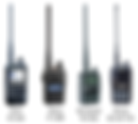
Ham radio offers a broad swath of different activities, including a wide range of different categories of radio communications. As such, a variety of different types of radio transceivers are manufactured to support these different on-air operations conducted under the Amateur Radio Service. This article summarizes the most common form factors and types of ham radios found in service in the U.S., along with a brief description of the typical capabilities of each. The Handheld Transceiver Also referred to simply as an "HT," a ham radio handheld transceiver packs amazing capabilities -- it is a complete station in your hand. You may think of the term walkie-talkie when you see an HT, but hams rarely use that description. The HT is probably the most common ham radio type in existence, and while compact, it can provide excellent communications in many situations where a larger radio is impractical or unnecessary. The HT is perfect for voice communications over a range of a few miles when the operator is on foot, or simply when a more powerful radio is unnecessary for the desired communication. Many hams keep an HT on and handy for monitoring purposes in the home, and depending on the location and situation, it may provide more than enough capability for casual local operations. Typically transmitting about 5 watts of power, the HT uses frequency modulation (FM) to carry clear voice signals. It has an integrated microphone and speaker, an attached antenna that can be easily removed and replaced with other radiators for various operating situations, and usually knob and keypad controls for basic functions. Often, an HT will have ports to accommodate a headset with combination earphone(s) and microphone, as well as a remote push-to-talk switch. Often the HT will be used to communicate through a repeater station that provides much greater communications range. The repeater receives the HT's signal and instantly repeats it on another frequency. Using a pair of frequencies -- one to transmit and another to receive -- a low-powered HT can be used with a repeater station to communicate dozens or even hundreds of miles. If a repeater is within reach of your home, an HT may provide the bulk of your ham radio communications across a broad area. HT prices vary greatly depending upon features and manufacturers. Low-end HTs may be obtained for under $50, while full-featured higher quality HT's often run several hundred dollars. Our recommendation for new hams is to start with a basic analog voice HT radio that does not have lots of bells and whistles such as digital voice modes or built-in packet reporting hardware. Save your money for that later, and avoid the confusion and complexity inherent in such HTs while you become comfortable with basic operations. Many HTs are dual band, meaning that they operate on two different Amateur Radio Service bands. These bands are referenced by the approximate wavelength of the signals they send and receive. The most popular dual-band combination is the 2-meter band (VHF range) plus 70-centimeter band (UHF range) transceiver, and we recommend this combination for the beginning ham. Many repeater stations are operated on these two bands, improving the utility of a dual-band HT. The Mobile Station A mobile station is installed in a vehicle and will have a handheld microphone with a push-to-talk switch on it, rather than a chassis-integrated microphone like the HT. The mobile station chassis is usually a few inches across and a few inches deep, and perhaps two-to-three inches high, give or take. The chassis may be mounted under (or in) a vehicle dashboard, or placed under a seat to be operated with a remote control head or faceplate that is easier to mount. The mobile station will also use an external antenna mounted on the vehicle and connected using coaxial cable. Depending upon the specific model, a mobile station may use FM only modulation like the HT, or it may provide other types of modulation such as single sideband (SSB) or digital modes. It will usually also transmit higher power than an HT, with 50 watts maximum being a common capability. More capable mobile stations, especially those that provide the option of SSB mode, may transmit 100 watts (or more with an RF power amplifier). Like the FM-only HT, FM-only mobile stations often come with dual-band capability, and the 2-meter + 70-centimeter band combo is popular. In some regions the 1.25-meter band is also very popular, and radios using this VHF band are also available. Mobile stations providing SSB capability typically operate across the various high frequency (HF) Amateur Radio bands that provide long-distance communication via over-the-horizon propagation by ionospheric skip. Installing an FM-only mobile station is relatively straightforward for the new ham to accomplish. The station is powered with direct connection to the vehicle battery, avoiding any use of vehicle wiring for safety reasons. The antenna installation or mounting typically offers the greatest challenge, but magnetically mounted or clip-mounted antennas are quite simple to implement and can provide good performance. Installing a SSB mobile station presents a greater challenge. Avoiding noise and interference with the amplitude modulated SSB signal often requires solid radio component grounding and bonding of vehicle components, and it may involve troubleshooting vehicle electronics to track down vexing noise sources. Mobile antennas for the HF bands most typically used with SSB are more complex due to the necessity for them to be electrically shortened from their full 1/4-wave or 1/2 wavelength size, and they may require more complex installation methods or station components, such as a transmatch or tuner. We recommend that the newer ham start with an FM-only, dual-band mobile station for the VHF and UHF bands noted above. FM-only dual-band VHF/UHF mobile transceiver costs start around $300 for the major brands. Single-band mobiles are cheaper, and highly featured dual-banders can be significantly more expensive. Mobile stations that provide HF bands and SSB mode tend to start around $700 for the major brands. The Base Station The term base station means a radio station that is fixed in one place, usually in the home. A mobile station like those described above may be configured with a DC power supply to serve as a base station, and there are larger and more capable radios designed specifically for base station implementation. A base station will use a handheld microphone much like the mobile station, or it may use a desktop mic or boom mic if the operator chooses such substitutions. An external antenna is most commonly implemented with a base station, typically mounted on a mast or a tower outside the home. A wide variety of antenna types are feasible with the base station, including directional antennas that boost signal strength (provide gain) in the pointing direction of the antenna. A mobile station used in a base configuration will typically provide about 50 watts of power, as noted above, while larger stations specifically designed for base operations typically transmit up to 100 watts of power without any external amplification. Base stations (and mobile stations) may add an external RF amplifier to boost power up to the Amateur Radio Service legal limit of 1500 watts, although few operators find the need to do so. Base stations with SSB modulation tend to have one of the following operating formats with respect to the Amateur Radio Service bands: HF + 6-meters, all mode -- This popular combination includes the bands of 160, 80/75, 60, 40, 30, 20, 17, 15, 12, and 10-meters (HF bands), plus the VHF 6-meter band. The modes of operation (modulation type) are SSB, AM, FM, and digital operations, applicable to any of the available bands. "All band, all mode" -- this term usually means a transceiver that includes all of the bands and modulation types listed in the "HF + 6-meter" format, but also includes VHF and UHF bands such as 2-meters and 70-centimeters. Again, each mode may be used within each band. Note, some manufacturers also provide SSB-only transceivers and single-band transceivers. A wide variety of combinations of features and capabilities are marketed, and this summary focuses on the most popular engineering configurations only. Base stations vary in price widely depending on brand, capability, quality, and features, extending into many thousands of dollars not including peripheral station components or antennas. However, very capable HF base stations are available that will more than satisfy most operators for around $1000. But before you invest in a nice HF base station you'll want to earn the second-tier FCC Amateur General license so that you have the license privileges to use all those HF bands. The Portable Station A portable ham radio station is a station that is transported to a location other than its normal operating location to be operated. This is not the same as a mobile station that is almost always traveling. Instead, consider an operator who transports his base station to a camping location and powers it with a battery to communicate while camping. Or, an operator may take a station from home to a state park to operate, participating in the popular Parks on the Air (POTA) activity. Portable operations are fun and implemented by many hams, including the author. Where to Begin? These categories of ham radio are the most common you will encounter. As noted, we recommend your first radio be a dual-band, analog-only FM HT with which you can get accustomed to basic operations, including repeater use. After some experience, the next step is perhaps the mobile FM station installation in your vehicle. Later, and usually after earning the Amateur General license that provides access to the bulk of the HF bands that propagate great distances, go for that SSB multiband transceiver base station with a relatively simple external wire antenna. As you learn and gain experience, you can upgrade your station and your operations to suit your preferences and your wallet. First, let's earn that Technician license with HamRadioSchool.com! Stu WØSTU